How to Handle Garden Work and Outdoor Jobs at Height
Outdoor work at height isn’t the same as working indoors.
You’re dealing with uneven ground, weather, awkward angles and jobs that rarely go exactly to plan. Whether it’s trimming hedges, clearing gutters or fixing something on the outside of a building, the setup makes all the difference.
Get it right, and the job flows.
Get it wrong, and you’re fighting it all day.
Here’s how to make common outdoor jobs easier, safer and more efficient.
Trimming Hedges Without Overreaching
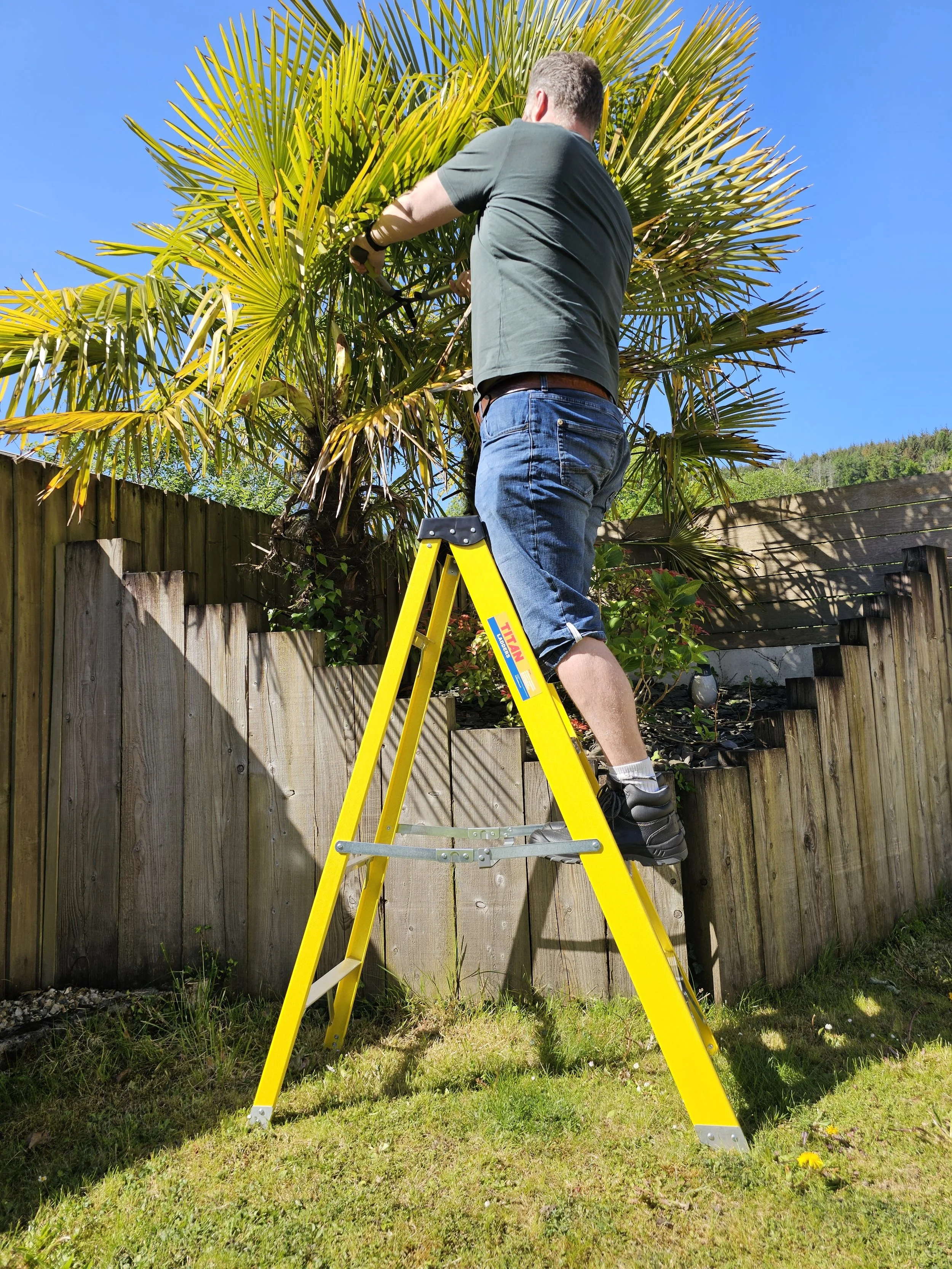
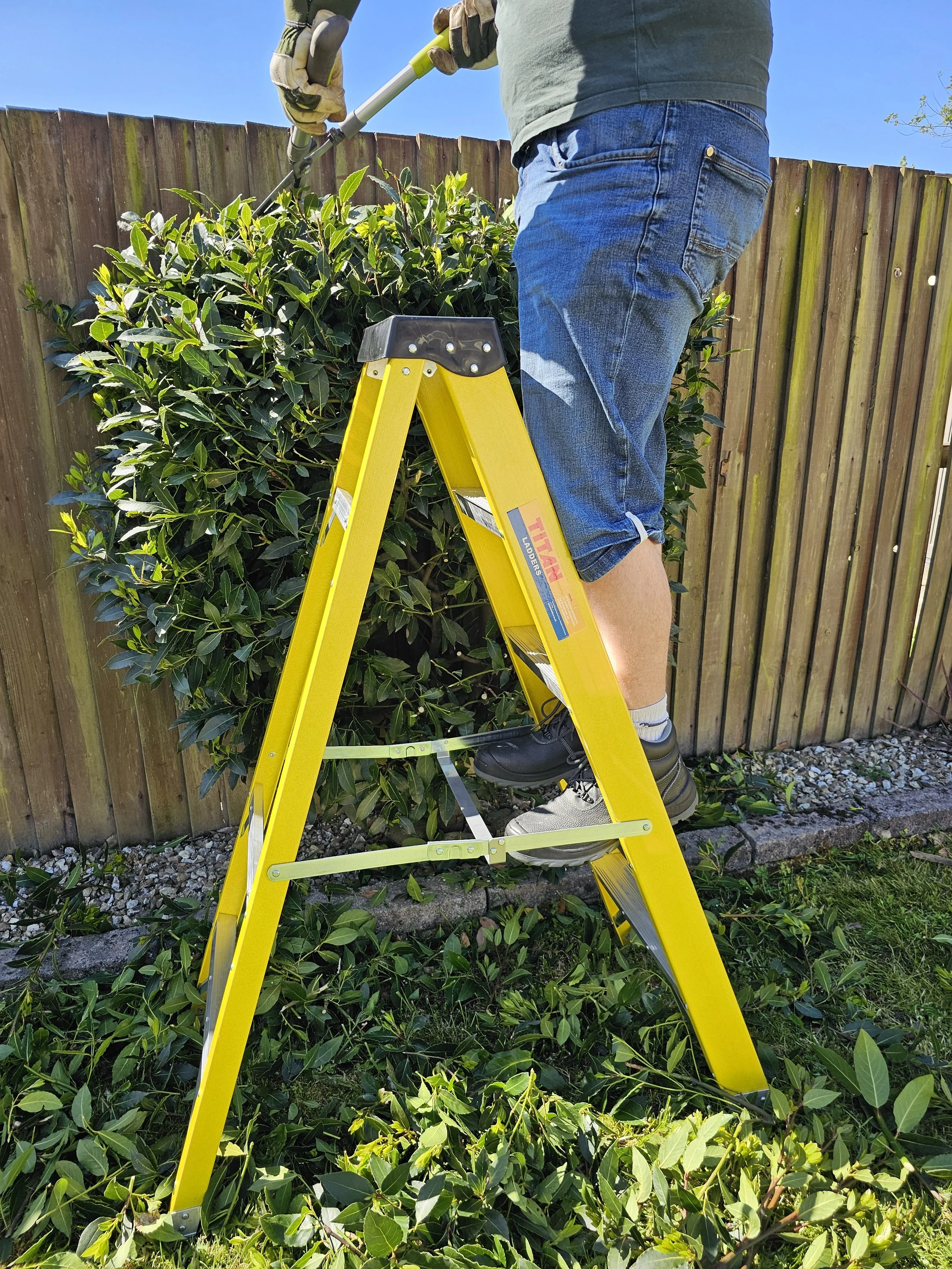
Hedge cutting is where most people start taking shortcuts.
You go up the ladder, get into position, then instead of moving it, you stretch that bit further to finish the section.
That’s where things start to feel unstable.
Better way to work:
Set the ladder so you’re square to the section you’re cutting
Work in smaller sections rather than trying to reach across
Move the ladder regularly instead of leaning
You’ll actually get a straighter finish and feel more in control.
Pruning Trees and Working Above Shoulder Height
Tree work can get awkward quickly, especially when branches aren’t where you want them to be.
You’re often:
Reaching out
Cutting at angles
Managing weight as branches come away
What to watch:
Don’t work higher than feels comfortable
Keep both feet planted before making cuts
Think about where the branch is going before you cut it
This isn’t a job to rush. Staying balanced matters more than speed.
Clearing Gutters and Working at Roof Level
This is where the type of ladder really matters.
A step ladder can be useful for lower-level access, but once you’re working along a run of guttering or dealing with height, you need something that’s built for it.
For higher access jobs:
An extension ladder is the right tool for tasks that typically take less than 30 minutes.
It allows you to reach roof level safely.
The Titan Aluminium Extension Ladder is designed for this kind of work, giving you the reach needed for gutters, fascia boards and higher exterior maintenance.
How to work smarter:
Set the ladder at the correct 75 degree angle
Work in short sections and move along
Don’t try to clear too much from one position
Most issues happen when people try to “just stretch a bit further”.
Installing Outdoor Lighting and Fixtures
Outdoor lighting jobs are a mix of height and precision.
You’re holding fittings, managing cables and fixing into place, often while adjusting your position.
What slows you down:
Not having tools within reach
Working too high or too low
Trying to adjust mid-task
Better setup:
Work at a height where your hands are just below shoulder level
Keep tools close before you climb
Position yourself directly in front of the fixing point
Small adjustments here make the job much smoother.
Keeping Tools Where You Need Them
Outdoor jobs often turn into constant trips up and down the ladder.
You forget one thing, then another.
Over a day, that’s a lot of wasted time.
Simple fix:
Before you start:
Get everything you need together
Keep your most-used tools within reach
Break the job into stages
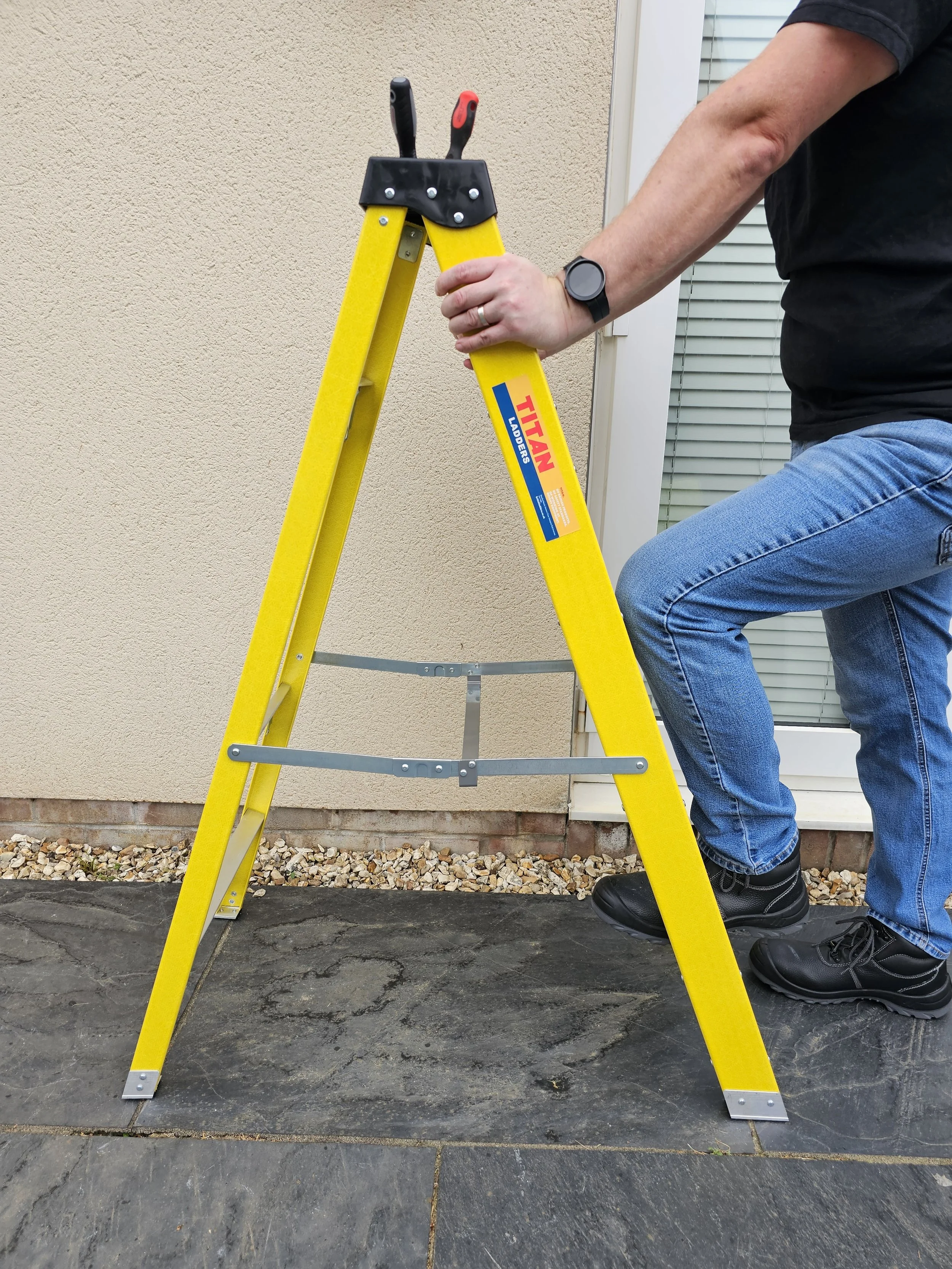
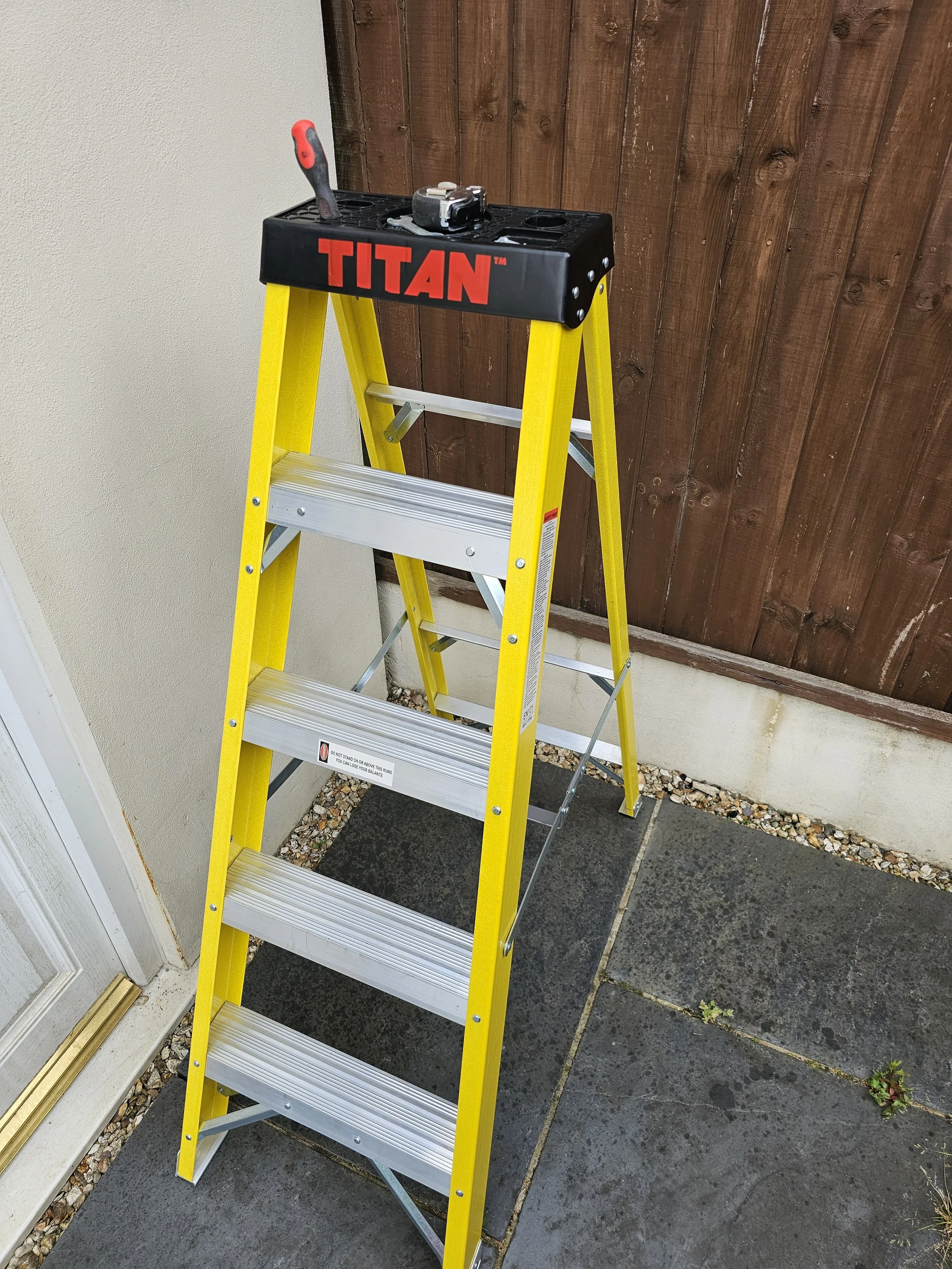
For step ladder work, having a tray to hold tools can make a big difference. For extension ladder work, use a tool belt.
Dealing with Real Conditions
Outdoor work isn’t predictable.
You’ve got:
Wet grass or paving
Loose ground
Wind
Debris underfoot
Before you climb:
Check the ground is firm and level
Make sure the ladder feet are properly positioned
Clear anything that could shift or move
If something doesn’t feel right, it usually isn’t.
Using the Right Ladder for the Job
Most outdoor work falls into two categories:
Lower-level jobs
Hedge trimming
Light maintenance
Outdoor decorating
A fibreglass step ladder, like the Titan TNGFHS, works well here. It’s stable, easy to move and suited to repeated use.
Higher-level jobs
Gutter clearing
Roofline work
External repairs
This is where an extension ladder, like the Titan Aluminium Extension Ladder, is the better option. It gives you the reach and positioning needed to work safely at height.
Making Outdoor Jobs Easier on Yourself
Most outdoor work problems don’t come from the task itself.
They come from:
Poor positioning
The wrong ladder
Rushing the setup
Using the right ladder for the job makes everything easier.
If you take a few extra minutes to set things up properly, you’ll work more comfortably, get better results and reduce the chances of something going wrong.
Titan. Of Outdoor Work.